


A seller called me last spring after her inspector found mud tubes running up the west foundation wall of a Berwyn bungalow. Six weeks later, that same house closed without a single price reduction tied to termites.
Most of what happened in between was paperwork and pricing. Wood-destroying insects feel like a sale-killer, and plenty of Illinois sellers trying to sell a house with termites assume every buyer is about to walk. It’s more boring and a lot more manageable once you see how disclosure, inspection, and pricing interact in this state.
What Makes Illinois Homes So Vulnerable to Termite Damage?
I once walked a 1954 ranch in Berwyn with mulch piled eight inches up the siding. The fix was a bare strip of dirt around the foundation, and that seller never saw another swarm.
Building codes lean on the Termite Infestation Probability map, and it puts Illinois in TIP Zone 2, rated moderate to heavy. Wet clay soil and a lot of old housing give subterranean termites nearly everything they want.
Basements here are usually poured concrete or block, often decades old, with plumbing penetrations and hairline cracks. One University of Illinois Extension educator traced termites in their own house to small gaps between PVC drainpipes and the foundation concrete. The termites built mud tubes right along that seam into the walls.
Moisture does the rest. Heavy spring rain soaks Illinois clay soil, and that clay holds water against foundations. Downspouts that dump four feet from the house keep the soil damp all season, so termites get the humidity they need for free.
Older housing stock makes it worse. Chicago-area bungalow belts, Rockford’s older neighborhoods, and Springfield’s pre-war stock often have untreated wood sitting close to grade. Southern Illinois, around Carbondale and Belleville, gets milder winters and a longer warm season for pests to stay active.
What Do Termites Look Like in Illinois Homes?
An eighth of an inch. That’s roughly the size of the worker termites doing the eating inside your walls, and you’ll almost never see one.
You’ll see swarmers instead. They run about three-eighths of an inch, dark brown to black, with two pairs of equal-length wings that drop off after mating. Flying ants have one long pair and one short pair, and every spring I hear from homeowners who’ve mixed the two up.
Pencil-width tubes of soil and saliva running up foundation walls, floor joists, and support posts are the other giveaway. The common subterranean termite in Illinois needs high humidity and avoids open air, so it builds covered highways rather than crossing bare concrete.
Then there’s the wood itself. Tap a basement sill plate with a screwdriver handle. Solid wood thuds, while infested wood sounds hollow and gives under pressure. Bubbling or peeling paint is another common sign, because termites eat right up to the surface and leave a paper-thin shell behind.
Eastern subterranean termites are the species you’ll run into most here, and they’re behind most of the termite damage in Illinois. Some parts of Illinois also see the dark southeastern subterranean termite, but treatment for the two overlaps heavily.
Most Illinois homeowners have never really looked at their sill plate. That strip of wood where framing meets foundation is usually where termites show up first.
How Do You Know If Your Illinois House Has Termites?
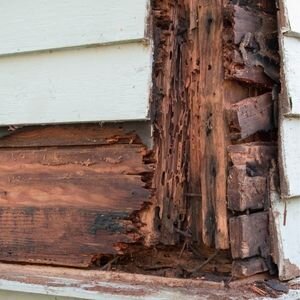
I spent my first few years assuming a spring swarm meant the colony had just arrived. Wrong, and expensively so.
A termite colony usually needs three to five years of growth before it produces winged reproductives. So by the time termite swarmers land on your windowsill, that colony has been feeding on something for years.
Most Illinois termite swarms happen in spring, typically March through May. They fly in daylight, often on a warm day right after rain. A quiet summer never means an all-clear, though. University of Illinois Extension notes that swarms can happen during most of the warm months here. Feeding never stops in winter either, since Illinois termite colonies just retreat deeper into the soil or stay inside their tubes.
Check the perimeter of your home yourself before you call anyone. Scan the exposed foundation concrete for mud tubes, then look at window wells, porch post bases, crawlspace piers, and anywhere wood touches soil. Piles of shed wings near south-facing windows are worth a photo.
Sellers in Illinois who skip this step and let the buyer’s inspector find termites first end up negotiating from behind. If you’ve already spotted tubes or shed wings and want a second opinion, contact us and I’ll tell you what I’d look at next.
What Does a Termite Inspection in Illinois Involve?
Illinois licenses structural pest control businesses through the Illinois Department of Public Health under the Structural Pest Control Act. Every licensed business has to employ at least one certified technician, so asking for the license number is fair game. A legitimate operator hands it over without hesitation, and you can check it in the department’s online business search.
A standard wood-destroying insect inspection usually takes about an hour on an average Illinois home. The inspector works the exterior first, then the basement or crawlspace, then reachable interior spots like under sinks and around bath traps. Attics get a look when the framing is accessible.
What you get is a report. It typically notes current activity, signs of past activity, conditions that invite infestation, and any visible damage. Illinois lenders and buyer’s agents often ask for that document whenever termites come up in a transaction.
Sellers should keep every inspection document and treatment receipt. Illinois buyers get nervous about termites in ways they don’t about a tired water heater, and a tidy paper file answers their questions before they turn into demands.
How Much Does Termite Damage Lower Your Home’s Value?

Buyers panic over termites far more than the repair bill usually justifies. Cosmetic evidence and structural damage are two completely different financial events, and the Illinois disclosure form draws that exact line. News coverage tends to blur them together, yet where your house lands between the two decides what you can ask.
Redfin reported that Illinois home prices rose 4.3% year over year in August 2026, with a statewide median sale price of $328,632. That’s enough demand to absorb disclosed termites, as long as the price reflects them honestly.
Local numbers swing hard. A four-thousand-dollar repair barely registers on a Lincoln Park home. In Decatur, where Redfin put the median sale price at $128,935 in July 2026, the same repair eats a much bigger share of the house.
This is where Illinois sellers lose money for no reason. Buyers don’t discount for the repair; they discount for the uncertainty. Hand them a vague termite problem and they’ll mentally set aside ten or fifteen thousand dollars for the worst case. Hand them a licensed inspection report and a written treatment estimate, and the negotiation shrinks to a documented number.
About 13.4% of Illinois listings took a price drop in August 2026. A termite surprise mid-contract is one of the fastest ways to land in that group.
Do You Have to Disclose Termites When Selling a House in Illinois?
“I never had it inspected, so I don’t technically know, right?” The Illinois statute is more forgiving on that point than you’d guess, just not in the way sellers hope.
Under the Residential Real Property Disclosure Act, you aren’t obligated to make any specific investigation or inquiry to fill out the disclosure report. The form defines “aware” as actual notice or actual knowledge, without any specific investigation. So willful ignorance isn’t exactly illegal here. It’s still a terrible strategy, because the buyer’s inspector finds the termites anyway and your credibility goes with them.
What you do have to answer is specific. The Illinois form asks whether you’re aware of current infestations of termites or other wood boring insects. A separate item asks whether you’re aware of a structural defect caused by previous termite infestations. You can read the full statutory form on the Illinois General Assembly website.
Say a licensed operator treated a termite colony years ago and nothing structural was harmed. You’d likely mark no on both items, then hand over the treatment documents anyway so old drill holes or a bait station don’t spook the buyer’s inspector.
Selling as-is in Illinois doesn’t erase your duty to disclose termites you know about. It changes who pays for repairs, not what you say.
Certain Illinois transfers fall outside the Act entirely. Exempt sales include court-ordered transfers like those in probate, divorce, or bankruptcy, along with deed in lieu of foreclosure transfers and sales by a fiduciary administering an estate or trust. If you’re an executor, confirm your situation with a real estate attorney rather than assuming.
Should You Treat Termites Before Listing Your Illinois Home?

“Do I fix the termites or just knock it off the price?”
My answer depends on one thing: how much structural work sits behind the termites. Treatment alone, meaning a liquid soil barrier or a bait system installed by a licensed Illinois operator, is usually worth doing before you list. It’s a contained cost, it knocks out the active colony, and it gives you a record buyers can see.
Structural repair is a different calculation. Replacing sill plates or sistering joists in an Illinois basement means permits in many municipalities, a contractor’s schedule, and the real chance that opening a wall reveals more.
Disagree with me if you like, but “fix everything before listing” is lazy advice for termites. A Rockford seller with a tight timeline and a modest sale price is often better off treating the colony, documenting the damage, and pricing for it.
Timing tends to work in your favor. Clever Real Estate puts the average Illinois home sale at about 78 days from listing to close. That’s roughly 43 days to go under contract plus about 35 days to close. Treatment and a repair bid usually fit inside that window.
FHA and VA financing add a wrinkle. VA loans generally require a wood-destroying insect inspection on Illinois properties. FHA requires a clear report when there’s evidence of active infestation, when state or local rules call for one, or when the lender wants it. Live termites found along the way usually have to be treated before the loan funds. If your buyer pool leans toward those programs, treating first stops being optional.
Investors like us skip all of that and underwrite termites as a line item. Braddock Investment Group Inc buys Illinois houses with active infestations routinely, which takes the repair-before-listing question off the table for sellers who’d rather not fund the work.
Can You Sell a House with Termites in Illinois?
Yes, and I’d tell you that sitting at your kitchen table with the inspection report between us. People sell Illinois houses with termites every single week.
Retail buyers with conventional financing mostly stay at the table when you’ve disclosed everything upfront. In August 2026, 35.8% of Illinois homes still sold above list price, so demand hasn’t gone anywhere. To an informed buyer, a disclosed, treated, documented termite history reads as a solved problem.
Buyers who get blindsided by termites act differently. They renegotiate hard, order a second inspection, and a meaningful share of them walk. Illinois sale-to-list ratios ran 99.2% in August 2026, so the market generally isn’t forcing deep discounts. Surprises force them.
Cash buyers and investors make up the third pool. We skip appraisals and lender requirements, then price the termites into our offer instead of asking you to fix them. You trade a lower gross number for a faster, more certain close with no repair outlay. If that trade fits your timeline, here’s how it works when you sell your home for cash in Illinois with the termites still in place.
That’s the route a retired couple in Cicero took when they sold me their two-flat. They’d inherited the building, never wanted to be landlords, and spent six years chasing rent. When the last tenant left and the inspection turned up termites in the rear porch framing, they were done. A Peoria seller facing a relocation deadline with compromised joists should probably make the same call. If you own a similar building near there, here’s how we buy houses in Cicero.
What never works in Illinois is hiding termites. Illinois buyers get termite inspections, lenders ask questions, and a concealed infestation found mid-escrow costs you the buyer and the next thirty days.
How Can You Prevent Termites From Coming Back?
A seller in Naperville treated her home for termites, then re-landscaped the front beds and stacked fresh mulch right against the siding. She’d just invited the pests back.
Treatment kills a colony. Conditions invite the next one. Retired Illinois Extension entomologist Phil Nixon often suggested a 12 to 18 inch strip of bare dirt around the foundation as the best defense against insects looking for shelter, termites included. Leaving concrete exposed where the foundation meets soil also makes new activity easier to spot.
Sealing comes next. Caulk foundation cracks, especially around the plumbing penetrations that let termites into so many Illinois basements. Gaps around drainpipes are the most common entry route I see in older homes across the Chicago suburbs. Since we buy houses in Chicago and the towns around it, I’ve seen that same gap in more basements than I can count.
Water management does more than any chemical. Extend downspouts well away from the foundation, grade soil so it slopes away, and fix the gutter that’s been overflowing onto the northeast corner since 2019. Illinois clay holds moisture brutally well, and constant dampness against your foundation is a standing invitation.
Firewood against the garage, old wooden deck boards in the side yard, a rotting railroad-tie border: all of it feeds termites within feet of your house. Move it or lose it.
A yearly check costs homeowners little and keeps your documentation current. If you plan to sell within a few years, that paper trail turns termites into a routine maintenance item.
Who Can Help You Deal with a Termite-Infested House in Illinois?
Most sellers call the wrong professional first.
Pest control gets the call and prices out treatment, but nobody has answered the question that decides your outcome: is the structure compromised? Start with a licensed Illinois inspector to identify the problem, then bring in a contractor or structural engineer if the report flags damage to load-bearing members. Treatment is step three, not step one.
Illinois sellers lean on real estate attorneys more than sellers in many states, since most residential contracts here include a five-business-day attorney review period. If termites surface after you’re under contract, your attorney handles the disclosure supplement and the credit negotiation.
Agents earn their fee here when they know how to market a treated property. Clever Real Estate’s 2026 survey puts the average Illinois listing commission at 2.41%, the lowest in the country. A good agent puts the inspection report and treatment documentation in the listing file on day one, which kills the uncertainty discount before anyone writes an offer.
For sellers who’d rather skip all of it, a direct buyer handles the termites after closing. Braddock Investment Group Inc works with Illinois homeowners in exactly that spot, including landlords, heirs, and people relocating on short notice. One heir outside Belleville called me after nearly a year of covering two mortgages, her own and her late father’s, on a house with termites in the crawlspace framing. If your house is out in DuPage County, our page for cash home buyers in Darien covers how we buy in that area.
Frequently Asked Questions
Should I Buy a House That Previously Had Termites?
Past termite activity alone isn’t a reason to walk away. What matters is whether the colony was professionally treated, whether a licensed Illinois operator documented the work, and whether any damaged structural members were properly repaired. Ask for the treatment records and have your own inspector confirm there’s no active infestation. Plenty of sound Illinois homes have termite history in their files.
Is a Free Termite Inspection Worth Getting?
Usually, with one caveat. Companies offering free inspections in Illinois hope to sell you treatment, so the inspection may be honest while the recommendation leans toward the priciest option. Use the free visit to confirm whether termites are present, then get a second estimate before you authorize work. If you’re a seller getting ready to list, paying an independent inspector who doesn’t sell treatment gives you a cleaner document to hand buyers.
Can You Sue a Seller Who Hid Termites From You?
Illinois law gives buyers a remedy when a seller knowingly violates the disclosure act, and termite questions sit right on that form. A seller found liable owes actual damages and court costs, and the court can award attorney’s fees to the winning side. Proving the seller actually knew is the hard part. The deadline is tight too, since a suit must be filed within one year of the earliest of possession, occupancy, or recording of the deed. If you think you were misled, talk to an Illinois real estate attorney quickly.
Can Homeowners Treat Termites Themselves?
You can buy retail products, and for a tiny isolated problem in a detached shed, that might be fine. Treating subterranean termites in a house is a different job. It means trenching the full perimeter, drilling through concrete, and applying termiticide at specific label rates, and Illinois requires licensing for structural pest control done for hire. DIY attempts usually suppress the visible activity while the colony lives on underground, which is the worst outcome if you plan to sell.
Do Termites Make a House Unsellable in Illinois?
No. Illinois houses with active infestations change hands regularly, both through retail listings with disclosed, treated conditions and through direct sales to investors. The infestation affects your price and your buyer pool, not your ability to transfer the property. Sellers who disclose early and document what they’ve done tend to keep their buyer and most of their number.
If you’re staring at an inspection report right now and wondering what it means for your sale, I’m happy to walk through it with you. We’ve bought Illinois houses with termites in the joists, in the sill plates, and in places I’d rather not describe, and sometimes the right answer is to list with a good agent instead. Either way, you’ll get a straight read on your options, with no pressure and no obligation.
Helpful Illinois Blog Articles