![Selling a House With Mold Issues in [market_city]](https://image-cdn.carrot.com/eyJidWNrZXQiOiJwcm9kdWN0aW9uLmNhcnJvdC11cGxvYWRzLm9uY2Fycm90LmNvbSIsImtleSI6InVwbG9hZHMvc2l0ZXMvMzk5NjgvMjAyNi8wOS9TZWxsaW5nLWEtSG91c2UtV2l0aC1Nb2xkLUlzc3Vlcy5qcGciLCJlZGl0cyI6eyJyZXNpemUiOnsid2lkdGgiOjExNTJ9LCJ0b0Zvcm1hdCI6IndlYnAifX0=)

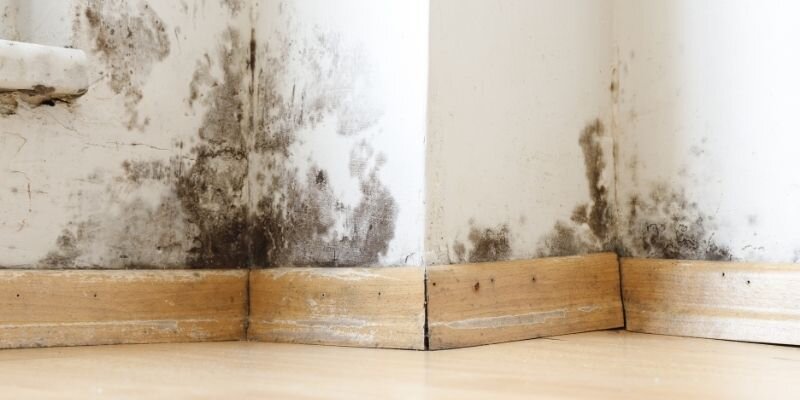
Musty basements are practically an Illinois tradition. Freeze, thaw, April rain, and clay soil that cups water against a foundation like a cereal bowl: our housing stock takes moisture abuse that Sun Belt houses never see. So an inspector types the word mold into a report, and half the sellers I meet panic. The rest wave it off as nothing. Both reactions cost money, and the second kind can cost it years later. Selling a house with mold problems in Illinois comes down to what you disclose, how you price it, and which buyer you aim at.
Mold and Your Illinois Home Sale: The Short Version
Concealment kills an Illinois home sale. Mold by itself almost never does. Surprises drive buyers away, not stains. A finished basement with a two-foot band of black speckling along the drywall is a negotiation, and I’ve walked into plenty that ended with a fair price cut instead of a walk-away. A basement freshly painted, with nothing written on the disclosure form, is a lawsuit waiting for a rainy spring.
You’ve got three honest paths, and each one fits a different seller.
Remediate first and list retail. That works when the water comes from a cracked downspout and not a failing foundation. Or list as-is with full written disclosure, priced for the condition, which pulls in contractors and landlords instead of first-time buyers. From what I’ve seen buying these myself, the third path is selling straight to a cash buyer who prices the problem into the offer and closes without an appraisal. If that sounds like your situation, you can sell your home for cash in Illinois and skip the demolition entirely.
A couple of years ago, I sat at a kitchen table in Downers Grove with a retired couple splitting assets in a divorce. Neither one wanted to manage a remediation crew from two different apartments. A cedar-strip canoe still hung in the garage that nobody had touched since the kids left. We wrote it up as-is, they signed on a Thursday, and the attorney split the proceeds at closing exactly the way the judge’s order said. Sales like that are why we buy houses in Downers Grove without asking anyone to open a basement wall first.
How to Spot Mold Signs in Your Illinois Home
You can smell mold you will never see. That locker-room odor in a closed-up basement comes from gases given off by colonies growing behind drywall, under carpet pad, or inside a wall cavity next to a slow supply line. Your nose catches what your eyes miss.
In Chicagoland, rust-colored or dark staining along the bottom four inches of basement drywall is usually the first thing you’ll notice. So is white crusty powder on block walls, which is mineral salt left behind by water passing through masonry. Hardwood that cups near a patio door, a bathroom ceiling that bubbles, window sills with black flecking after a cold snap: all of it traces back to moisture with nowhere to go.
Chicago bungalows with tired tuckpointing wick water into the north wall. Two-flats with flat roofs hide leaks above the ceiling drywall for years. Post-war ranches in Will County often have crawlspaces with bare dirt floors and no vapor barrier, so summer humidity condenses on cool joists all July.
When was the last time you pulled the boxes away from the wall behind your water heater? I find it most often there, along with the back corner of the utility room where the sump discharge line runs.
People credit sump pumps less than they deserve. A pump that ran fine for eleven years and quit during one thunderstorm can seed a basement with growth in 48 hours.
Why Mold Disclosure Matters When Selling Your Illinois Home
Get this part wrong, and you can be writing checks months after you’ve spent the proceeds. Illinois buyers who find a concealed material defect have real legal remedies. The claims that stick tend to be the ones where the seller knew and stayed quiet.
Sellers here sign a disclosure report that is legally binding, not a formality tucked into the packet. If you check “no” on water penetration in the basement, and the buyer later finds your remediation receipt in a kitchen drawer, your liability isn’t limited to fixing the drywall. Illinois attorneys pursue these claims under the state’s disclosure statute and, depending on the facts, under the Illinois Consumer Fraud and Deceptive Business Practices Act, which opens the door to damages beyond repair costs.
Insurance rarely rescues you. Most homeowner’s policies exclude long-term seepage and gradual moisture damage, so insurers deny plenty of mold claims outright. Once you’ve closed and moved, no policy stands between you and the buyer’s lawyer.
Disclosure also protects the sale in front of you. Buyers who learn about a moisture issue up front price it in and move forward. Buyers who hear it from their own inspector after they’ve fallen in love with the house feel deceived. That’s when contracts die during the attorney review period.
Write it down. Written, specific, boring disclosure is the cheapest liability insurance in real estate law.
Illinois Mold Disclosure Laws Sellers Need to Know
Sellers call me asking for the Illinois mold disclosure form, and I get why they assume one exists. There isn’t one. No state statute requires a mold-specific disclosure document, and Illinois REALTORS® pulled its own optional mold form out of circulation after a legal review, partly because no statutory requirement backed it up.
That absence confuses people into thinking mold doesn’t need disclosing. Sellers still owe the disclosure regardless. The Illinois Residential Real Property Disclosure Act requires you to disclose known material defects in writing, and the report covers flooding, leaks, and water penetration in the basement or crawlspace. A material defect under that Act is a condition with a real adverse effect on value, or one that would impair the health or safety of future occupants. Known toxic mold, and the water intrusion behind it, lands squarely inside that definition.
Two other disclosures do have their own statutes. Radon disclosure comes from the Illinois Radon Awareness Act. Lead-based paint disclosure comes from the federal law passed in 1992 covering homes built before 1978. People mix up radon gas and mold constantly, though they’re different problems with different paperwork.
Certain transfers are exempt from the residential disclosure requirement altogether, including transfers by court order, transfers by mortgage deed, and some spousal or fiduciary transfers. Exemption from the form isn’t a license to lie about what you know, and your real estate attorney can tell you in one phone call whether your situation qualifies.
Is Mold Testing the Seller’s Responsibility in Illinois?

Nobody’s forcing you to test, and I’d think hard before you order one anyway. That’s not me telling you to stick your head in the sand. It’s arithmetic about knowledge. Once a lab report names a species and a spore count, that information exists, and you’re disclosing it to every buyer who comes through.
No Illinois law makes mold testing a seller’s obligation. Buyers order their own inspections, and their inspector will flag visible growth or high moisture readings, whether or not you spent money first.
Testing earns its cost in two situations. If you’re remediating anyway and want a post-remediation sign-off to hand a skeptical buyer, a clearance test does real work. And if somebody in the household has been sick and you honestly don’t know whether the house is the cause, test for your family’s sake, not the transaction’s.
The Illinois Department of Public Health publishes plain guidance on this, including the point that visible mold usually needs no identifying by species before you clean it up and fix the water source. Spending $600 to learn the name of something you can see with a flashlight is money that belongs in the repair instead.
One caution on the cheap route. Those retail air-sampling kits produce numbers without context, and I’ve watched a $40 kit blow up a sale that a plumber could have solved for $300.
Should You Remediate Mold Before Selling Your Illinois House?
Which brings up the question every seller asks second, right after asking whether they have to tell anyone: Is fixing it worth it?
Start with the water, always. Remediation without solving the source is a rental agreement with the same problem, and a good contractor will say so before quoting the cleanup. Regrading a flowerbed, extending downspouts eight feet from the foundation, or replacing a failed sump pump often costs less than the drywall work behind it.
Scope drives everything from there. Surface growth on a painted block wall is a cleaning job. Growth inside a finished basement’s framing means demolition, containment, air scrubbing, and rebuild. That’s where quotes climb into five figures fast on a fully finished lower level.
My rule of thumb after buying a lot of these: remediate when the repair is contained and documented, sell as-is when the water source is structural. Nobody recovers the cost of underpinning a foundation in a retail sale price.
Illinois recently moved toward regulating this trade. The Mold Remediation Registration Act became law as Public Act 103-0893. The state’s own page notes that the registration requirements aren’t in effect until pending rulemaking is adopted, with proposed rules published in the Illinois Register in October 2025. Until then, remediators aren’t required to register with IDPH, so vet contractors yourself on third-party certification and insurance.
Don’t wait on grant money, either. IDPH states plainly it has no funds for mold cleanup, and points homeowners toward local community development programs for rehab loans.
Tips for Handling Mold Disclosure the Right Way

I used to think a clean remediation invoice made mold a non-issue for buyers. It doesn’t. It makes them ask what caused the water, and sellers who can’t answer that question lose the sale they thought they’d protected.
So keep the paper. Invoices, moisture readings, the plumber’s ticket for the supply line, photos of the wall opened up, and photos of it rebuilt. A folder handed over at the attorney’s office does more for buyer confidence than any promise out loud.
Describe conditions, don’t diagnose them. Write what you saw, when you saw it, what you did about it, and who did the work. “Mildew” and “just a little surface stuff” are the two phrases I’d strike from your vocabulary; a buyer’s lawyer reads minimizing language as intent.
Never promise the problem is gone forever. You’re disclosing history and repairs, not issuing a warranty.
Have a real estate attorney look at your disclosure report before it goes out with the contract. In Illinois, attorney review is standard on nearly every residential sale, which means you’re paying that lawyer regardless. Twenty minutes of their time on the disclosure form is the best-spent money in the whole transaction.
Tell your agent everything, including the stuff that embarrasses you. Realtors carry disclosure duties of their own, and one surprised by an inspector’s report can’t defend their position.
Selling a House with Mold Problems in Illinois: A Smarter Strategy
A two-flat in Berwyn sat 90 days with mold noted in the listing remarks and three sales that died at the lender. The owner took a cash offer, closed in 19 days, and netted more than the second price cut would have brought after carrying costs. That arithmetic is what sends owners to cash home buyers in Berwyn instead of a fourth price reduction.
Price and buyer pool are one decision, not two. List a mold-affected house at neighborhood comps, and you’re marketing to financed buyers whose lenders won’t cooperate. Price it for condition, and you’re marketing to people who bring cash and a crew.
Statewide inventory keeps the retail option alive for cosmetic cases. Illinois REALTORS® reported 22,363 homes available for sale statewide in July 2026, down 4.7 percent from July 2025, with 13,503 homes sold that month. Tight supply means a buyer who wants your block will tolerate a project if the price reflects it.
Run your own net math before deciding. Retail sale minus commissions, minus remediation, minus two or three months of mortgage, taxes, and utilities, minus the credit a buyer will demand anyway. Compare that number to a cash offer that closes in under three weeks with no repairs and no appraisal. Sometimes retail wins by a wide margin, and I’ll tell sellers that when it’s true.
When the math favors speed, Braddock Investment Group Inc buys Illinois properties in their current condition, mold included, which spares you the contractor carousel entirely.
Cash Buyers, Lenders, and Mold: Who Will Actually Close
Will a bank even lend on this? That’s usually the first question after the inspection report lands, and the answer depends on who’s underwriting.
FHA and VA appraisers work from property condition standards, and visible mold with an active water source gets flagged for correction before closing. The lender then wants repairs done, verified, and sometimes re-inspected, all on the seller’s dime and the buyer’s timeline. I’ve watched those stall closings for weeks. Conventional lenders have more discretion, though an appraiser’s note about moisture damage still triggers underwriter questions.
Repair escrows exist, and they’re clumsy on mold. Lenders hold funds for measurable, bid-out work; open-ended moisture problems don’t fit that box. I’ve seen holdbacks rejected after everyone had already spent two weeks arranging them.
Cash buyers close because nothing outside the transaction can veto it. No appraiser, no underwriter, no lending guideline about the condition of real property. Price, title, and a closing date.
Speed has real value in this market. Homes in Chicago went pending in roughly 49 days on average over the three months ending August 2026, with a median sale price of $426,000, according to Redfin’s market data. Add attorney review, inspection negotiation, appraisal, and underwriting, and a retail sale with a mold issue runs well past that timeline from listing to funding. Carrying a vacant house for that long has a cost, and it’s rarely small. Those carrying months are why we buy houses in Chicago on a closing date you pick rather than one a lender sets.
Mold Liability, Lawsuits, and Legal Remedies in Illinois
An heir I bought from had already sold the family house once, to a financed buyer who backed out during attorney review after the inspector opened a closet in the back bedroom. She’d disclosed nothing because she’d never lived there and honestly didn’t know.
Not knowing is a real defense in Illinois. The disclosure statute keys on the seller’s actual knowledge, which is why “I didn’t know” and “I chose not to look” land very differently in front of a judge. Sellers who paint over stains, bury a remediation invoice in a drawer, or tell an agent to keep quiet have handed the buyer’s attorney a theory of the case.
As-is language doesn’t cure misrepresentation. Plenty of sellers believe those three words in a contract end the conversation about liability. They limit a buyer’s expectations about repairs; they don’t immunize a false statement on a disclosure form.
What does a buyer’s lawsuit look like? Typically, a claim for the cost of remediation and repair, sometimes with loss of value, and in fraud-flavored cases, a demand for fees. Legal battles over a $9,000 basement can burn far more than that in litigation, which is exactly why both sides usually settle.
Ask a licensed Illinois real estate attorney to review your specific facts before you sign anything. I’m a buyer, not a lawyer, and the difference matters when your exposure is on the line.
Getting Your Illinois Home Ready for a Mold Inspection
Cleaning up before an inspection isn’t staging a cover-up, and no, wiping a wall with bleach won’t fool a moisture meter that reads inside the studs. Preparation is about access and honesty, not appearances.
An inspector who can’t reach the crawlspace hatch writes “inaccessible” in the report, and buyers fill that blank with their worst assumption. Clear a path to the sump pit, the utility room, the attic ladder, and the electrical panel. Open the garage. Move the bins stacked against the north basement wall.
Running a dehumidifier for a week before the inspection is fair game, because a drier house shows its actual condition instead of a rainy-Tuesday snapshot. Gutters cleaned, and downspouts extended, tell an inspector that somebody’s paying attention to water management. Those small fixes also happen to be the right repairs.
Lay your paperwork on the counter: the remediation contract, the plumber’s invoice, and the receipt for the new sump pump with a battery backup. Buyers read tidy paperwork with care.
A landlord in Waukegan called me on a Monday, three months behind on the mortgage, with an auction date already on the calendar and a tenant’s abandoned deep freezer still humming in the garage. The back bedroom had mold from a roof valley that had been leaking for two winters. We closed in eleven days, and he didn’t pay for a single dumpster or the freezer haul-away.
That’s the trade he made: a lower number in exchange for the auction date coming off the calendar and a completed foreclosure staying off his record. For some sellers, that math doesn’t work, and they should list. For sellers who are out of runway, it’s often the only version of the sale that actually closes.
When Selling to a Cash Buyer Makes Sense, and When It Doesn’t
List with an agent if your mold problem is small, documented, and already fixed, and if you can afford to sit through a spring market with two showings a week. A clean remediation letter and a dry basement will get you retail money. That’s the better outcome, and I’ll say so on the phone.
Sell to a cash buyer when the repair cost is unknown and probably ugly. Sell when the house won’t pass FHA or VA scrutiny, when you’re managing a probate estate from another state, or when the timeline matters more than the last few thousand dollars. Fire damage, hoarding conditions, an inherited property full of forty years of belongings, a landlord done with tenant turnover: those are the situations where speed and certainty are worth paying for.
The honest version is that I need a discount to take on the risk of what’s behind the drywall. What you get back is a closing date you can plan around, no repairs, no cleanout, no appraisal, and no financing contingency falling apart in week five.
Frequently Asked Questions
Do I Have to Disclose Mold if It Was Professionally Remediated?
Yes, and you should want to. The Illinois Residential Real Property Disclosure Report asks about material defects and past water intrusion, and a remediated problem is still part of the property’s history. Disclosing it with the invoice and clearance paperwork attached is far stronger than a buyer discovering it later from a neighbor.
Will a Mold Problem Kill My FHA or VA Buyer?
Often, yes. Both loan programs require the property to be safe and sanitary, and appraisers flag visible mold and active water intrusion. The appraisal usually comes back subject to repair, meaning the work has to be done before closing, usually at the seller’s expense.
How Much Does Mold Remediation Cost in Illinois?
Small isolated jobs run a few hundred to a couple of thousand dollars. A wet basement wall with affected framing and drywall commonly lands in the $3,000 to $10,000 range. Add a foundation drainage fix or HVAC contamination, and the number climbs well past that, which is where sellers start reconsidering the whole plan.
Can I Just Clean It Myself With Bleach?
For a small surface patch on non-porous material, cleaning is reasonable. Bleach doesn’t solve anything behind drywall or inside studs, and it doesn’t address the water source. If you don’t fix the moisture, you’re going to meet the same mold again next spring.
Does Homeowners Insurance Cover Mold Damage?
Sometimes, and rarely in full. Most Illinois policies cover mold that results from a sudden covered event, such as a burst pipe, and exclude damage from long-term seepage, poor maintenance, or groundwater. Read your policy’s water damage section before you assume anything.
How Fast Can You Actually Close on a House With Mold?
Seven to fourteen days once we’ve agreed on a number and the title, work is clean. Probate, liens, or an unresponsive lienholder can add time, and I’ll tell you that upfront rather than after you’ve made plans around a date.
If you’re sitting on a house with a mold problem and you’re not sure whether to fix it, list it, or let it go, you’re welcome to call and talk it through. I’ll tell you what the house would likely need for the retail market and what I could pay as-is. Take that information to an agent, a contractor, or your attorney. No obligation, no follow-up campaign, and if listing is the better move for you, I’ll say so. You can also reach me through the Contact Us page if that’s easier than picking up the phone.
Helpful Illinois Blog Articles
- How to File Quitclaim Deed in Illinois Home
- How Long Does It Take To Sell A House In Illinois
- Does a Seller Pay Closing Costs in Illinois
- Can You Sell a House With a Mortgage in Illinois?
- How Much Does It Cost to Stage a House in Illinois
- How to Sell a House in Foreclosure in Illinois
- How to Sell a Hoarder House in Illinois
- Selling a House With Mold Problems in Illinois