![Typical Home Staging Costs In [market_city]](https://image-cdn.carrot.com/eyJidWNrZXQiOiJwcm9kdWN0aW9uLmNhcnJvdC11cGxvYWRzLm9uY2Fycm90LmNvbSIsImtleSI6InVwbG9hZHMvc2l0ZXMvMzk5NjgvMjAyNi8wOS9UeXBpY2FsLUhvbWUtU3RhZ2luZy1Db3N0cy5wbmciLCJlZGl0cyI6eyJyZXNpemUiOnsid2lkdGgiOjExNTJ9LCJ0b0Zvcm1hdCI6IndlYnAifX0=)

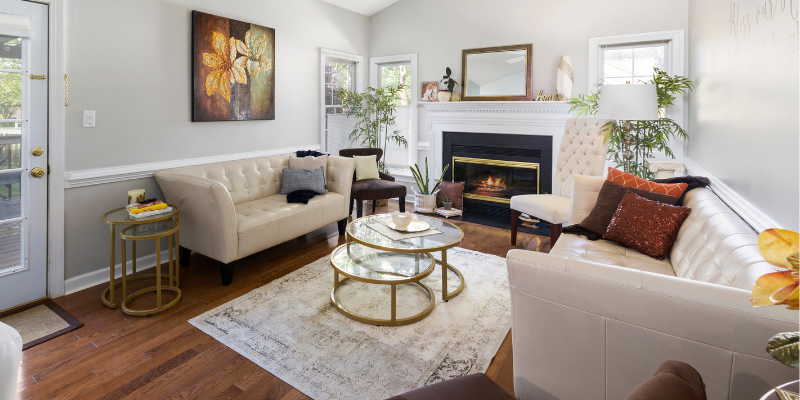
Staging costs in Illinois swing wider than most sellers expect. An occupied three-bedroom in Peoria and an empty colonial in Winnetka get quoted on completely different scales, and the gap has almost nothing to do with square footage. What you’re really paying for is furniture that arrives on a truck, plus every month it sits there. Before you sign anything, you should know which parts of the bill are fixed, which are negotiable, and whether your house needs staging at all. Plenty don’t.
What Is Home Staging and How Does It Work in Illinois?
A stager consultation runs $150 to $600. You get a walkthrough and a written punch list. No furniture moves that day. You’re paying for a trained eye and a plan, and plenty of home sellers stop right there and do the labor themselves.
Real estate staging is marketing. Interior design builds a room around your taste. A home stager pulls your taste out of the room so a stranger can picture their own couch by the window. Same sofa, opposite goal.
Most stagers in Illinois work through four steps: the consultation, a written scope, install day, then de-staging once you close. That last step matters for your contract. Ask whether pickup is included in the quote or billed separately. That line gets buried more often than it should.
You hit more staging headaches here than in a subdivision-heavy Sun Belt metro, thanks to our housing stock. Chicago bungalows run long and narrow, with the dining room stuck in the middle of the house. Mid-century split-levels around Arlington Heights leave buyers guessing which room is the family room. Farmhouses outside Bloomington still have formal parlors nobody has sat in since the Nixon administration. A stager who works Cook and DuPage every week can solve those rooms with two pieces of furniture instead of six.
Speed matters too. In August 2026, Chicago homes sold at a median of $426,255, up 9.3 percent from a year earlier, and sat a median of 49 days on the market, according to Redfin. Seven weeks of showings gives one bad listing photo plenty of time to do real damage. Seven weeks is also long enough for a seller to rethink the whole approach, which is how plenty of homeowners end up calling cash home buyers in Des Plaines instead.
The photographer rarely comes up in these conversations, and that’s a mistake. Staging exists mostly to serve the photos buyers thumb past on a phone. If your agent is shooting the house with a phone in the rain, rented furniture won’t rescue you. If you want to skip staging altogether, Illinois cash buyers can provide an alternative for selling the property as-is.
How Much Does It Cost to Stage a House in Illinois?

Here are the numbers behind what it costs to stage a house in Illinois. Nationally, most staging projects run $830 to $2,917, and the average bill lands at $1,846, per Angi’s 2026 cost research. Illinois sellers outside the city usually come in under that average. Chicago proper and the North Shore push past it.
Per-room pricing is the structure you’ll be quoted most often, usually $300 to $700 a room. Hourly work exists too, at $50 to $150 an hour, and the rate tracks the market the stager works in. Chicago and the collar counties sit toward the top of that band.
The occupied-versus-empty split is where the money really lives.
Staging a house you still live in runs $1,000 to $3,000, since your sofa, beds, and dining table are already there and the stager is editing rather than importing. A vacant house runs $4,000 to $6,000, and that’s before the rental clock starts. Furniture rental alone is $500 to $600 per room per month, as Bankrate lays out in its staging cost breakdown. Plenty of companies write a three-month minimum into the contract whether you sell in week one or not.
Don’t accept a quote that shows only the monthly rental number. Delivery, setup, and the teardown crew are real expenses. A flat-fee proposal that bundles all three is easier to compare against a competing proposal. Two proposals are the minimum. Three is better.
Decluttering gets billed on its own, often $650 to $1,000 and up, because hauling and packing thirty boxes has nothing to do with design work. Some stagers subcontract it. A few won’t touch it at all.
Virtual staging sits at the cheap end. It starts near $35 a room and runs roughly a tenth of what physical staging costs, but it only fixes your photos, not the empty room buyers walk into. Falling for the images and then walking into bare drywall leaves buyers feeling misled. That sting costs you more than you saved.
If you’d rather skip the staging costs, Braddock Investment Group Inc can make a cash offer for your Illinois house as-is. You can avoid paying for furniture, rentals, decluttering, and other preparation before selling.
What Factors Affect Home Staging Prices in Illinois?
Vacancy moves the bill more than square footage ever will. An empty four-bedroom in Schaumburg can run several times the price of a furnished one, because every object in every photo arrives on a truck.
Room count comes next, though not the way people assume. Stagers rarely dress the whole house. The rooms that get attention are the ones buyers judge: the living room, the primary bedroom, the dining room, the kitchen counters. Guest bedrooms and laundry rooms usually get skipped, and a good stager will say so before you ask.
Not long ago, a retired couple in Berwyn brought me a bungalow they’d inherited. It was packed with thirty years of their parents’ belongings, including a garage stacked wall to wall with canning jars and a snowblower that hadn’t started in a decade. The siblings wanted a clean exit and zero weekends spent sorting. Staging was never the right question there. The right question was how fast the place could change hands as-is, which attracts investor home buyers in Arlington Heights and surrounding Illinois cities.
Your timeline prices the job too. A stager pulling inventory for a one-week open house window quotes one way. Furnishing a place that may sit through a slow February is another.
Call your insurance company before the house goes empty. Carriers handle empty properties differently from occupied ones. Your insurance agency can tell you how long the current policy lets the place sit vacant before coverage changes. Rented furniture raises its own question, since insurers can’t seem to agree on whether someone else’s inventory in your house is covered at all. One phone call to your agent settles both.
Price band changes the math. A $250,000 ranch in Rockford and a $900,000 house in Hinsdale draw different buyers who want different things. At the top end, fully furnished packages, custom art, and higher-end decor are expected rather than admired. Below the median, sellers get most of the benefit from paint, light, and empty countertops.
Where you sit inside Illinois matters as well. A stager trucking inventory from a Chicago warehouse down to Kankakee will build mileage into the fee, and rightly so. Ask any Chicago firm what its travel radius is before the first visit.
Can Staging Costs Fit Into Your Illinois Home Sale Budget?

Budgeting to stage a house in Illinois starts with one percentage. The industry rule of thumb puts two to three months of staging at roughly 1 percent of the list price. The median Illinois home sold for $338,000 in July 2026, up 6 percent from a year earlier, according to Illinois REALTORS. Run that percentage, and you’re looking at a few thousand dollars, sitting next to agent commissions, title fees, and whatever the buyer’s inspector finds in your crawl space. Staging is one line on a much longer bill, so it helps to know what seller closing costs in Illinois actually run before you decide how much of that budget belongs to furniture.
Where does that money come from if you’ve already stretched to buy the next house? Sellers rarely ask, and two answers exist. Some stagers will wait and bill you at closing for a small premium. Some listing agents fold basic staging into their marketing budget, which is worth raising before you sign a listing agreement rather than after.
That same $3,000 could instead fund a short-term rate buydown as a buyer credit. Worth running the numbers on that tradeoff. On a house that already shows well, a buydown often pulls more offers than a rented accent chair. On an empty house with bad photos, it does nothing, because nobody’s touring.
What’s your actual goal, the highest number or the fastest exit? Those two answers point to different budgets. Sellers chasing top dollar on a furnished, updated home in Glen Ellyn should probably spend on staging and good photos. Sellers who need certainty by a specific date usually shouldn’t spend on either.
That’s a large part of why cash buyers exist. When I’m asked to look at a property, staging isn’t part of the conversation, and neither are repairs or commissions. Cash house buyers in Schaumburg and other Illinois cities can make an offer without requiring you to spend money getting the property ready for sale. It isn’t the right answer for every house. It is the right answer when the prep budget doesn’t exist.
Is Home Staging Worth the Cost for Illinois Home Sellers?
If your house is empty and your listing photos look like a code inspection, home staging is worth considering. That’s the whole test for most home sellers, and it’s a shorter test than the industry likes to admit.
Research backs staging, though more modestly than the marketing suggests. In NAR’s 2025 Profile of Home Staging, 83 percent of buyers’ agents said a staged home made it easier for their clients to picture living there. Twenty-nine percent of agents reported offers coming in 1 to 10 percent higher. And 49 percent of sellers’ agents saw staged homes spend less time on the market. Median spend was $1,500 when a staging service handled the work, and $500 when the seller’s real estate agent did it.
Read that gap carefully. A good chunk of the benefit is plain judgment about what to haul out. Supply shapes the return as well. Illinois REALTORS counted 13,503 homes sold statewide in July against 22,363 homes available, inventory down 4.7 percent from the prior July. Fewer competing listings means less pressure to out-decorate the house down the block.
My honest read after buying a lot of houses: staging pays best on vacant properties, odd floor plans, and anything priced above the local median. It pays poorly on a clean, occupied three-bedroom in a hot suburb where buyers already compete. Paying $2,500 to dress a house that would have drawn three offers anyway is comfort spending, not investing.
A property with a leaking roof, knob-and-tube wiring, or thirty years of deferred maintenance can’t be staged into a higher price. Furniture doesn’t hide a wet basement. At that point, you’re weighing a repair budget against a cash sale, and the numbers usually settle it for you. If that call has you stuck, read up on whether you can sell your house as-is without repairs before you spend a dollar on either one.
How Do You Stage Your Own Home Before Selling It in Illinois?

An empty Oak Park living room photographed at noon looked like a storage unit. Two rented lamps, a $40 rug, and a chair from the seller’s basement later, the same room read as a place where someone reads the paper.
You can stage a house in Illinois yourself, and most of the work is labor rather than talent. Pull a third of the furniture out of every main room and stack it in the garage. Rooms photograph larger when they’re underfilled, and buyers walking a home want clear paths, not conversation groupings.
Light is where DIY sellers win the most ground. Swap every bulb to the same warm temperature, clean the windows inside and out, and add a lamp to any corner the ceiling fixture misses. Illinois winters mean half your showings happen in gray flat light, and a dark house reads as a neglected house. Paint sells better than furniture. One neutral color across the main floor does more for your price than any accessory you can rent.
Spend your money on the rooms buyers score first: the living room, the kitchen counters, the primary bedroom. Clear the counters down to one bowl and maybe a plant. Take down the family photos, the diplomas, the refrigerator art. Buyers who see personal items start thinking about your life instead of theirs.
Curb appeal is nearly free in warm months. Fresh mulch, a trimmed hedge, a swept walk, and a clean front door handle cost under $100 in most Illinois ZIP codes. In February, shovel the walk before every showing and put the porch light on a timer. Opinions form before anyone reaches the door. Skip the rented accent pillows and the fake fruit. Nobody has ever paid more for a house because of a bowl of plastic lemons.
If you’d rather skip the staging work entirely, contact us to see what a cash offer for your Illinois house could look like, no staging required.
Frequently Asked Questions
How much does home staging cost in Illinois?
A consultation where a stager walks your house and hands you a punch list usually runs $150 to $600. Staging a vacant home typically lands between $4,000 and $6,000, with monthly furniture rental on top of that. Occupied homes cost less, since the stager works with what you already own.
Does staging actually increase the sale price?
Industry surveys say it can, and agents who represent buyers report that staged homes are easier to sell. The studies lean on agent opinion rather than controlled tests, though, and the effect shrinks where inventory is low. Treat staging as a way to cut days on market more than a way to raise your number.
What should I not spend money on before selling?
Anything a buyer will replace. New granite, designer light fixtures, and high-end flooring rarely return what you put in. Paint, cleaning, decluttering, light bulbs, and yard work return more per dollar than any upgrade.
What if my house needs repairs I can’t afford?
Staging doesn’t solve structural problems, and most buyers with a loan can’t close on a house with big problems. Your realistic choices are a price that reflects the condition, a repair loan, or a cash sale where the buyer takes the property as it sits.
If you are weighing what to fix, what to stage, and what to skip, it helps to know what the house is worth exactly as it stands today. Braddock Investment Group Inc buys Illinois houses in as-is condition, no cleaning, no repairs, no furniture rental. Reach out to us at (312) 564-4058 whenever you want a straight cash number to compare against the listing price. There is no obligation either way, and knowing the floor makes every other decision easier.
Helpful Illinois Blog Articles