![Selling a House with Foundation Problems [market_city]](https://image-cdn.carrot.com/eyJidWNrZXQiOiJwcm9kdWN0aW9uLmNhcnJvdC11cGxvYWRzLm9uY2Fycm90LmNvbSIsImtleSI6InVwbG9hZHMvc2l0ZXMvMzk5NjgvMjAyNi8xMC9TZWxsaW5nLWEtSG91c2Utd2l0aC1Gb3VuZGF0aW9uLVByb2JsZW1zLnBuZyIsImVkaXRzIjp7InJlc2l6ZSI6eyJ3aWR0aCI6MTE1Mn0sInRvRm9ybWF0Ijoid2VicCIsIndlYnAiOnsicXVhbGl0eSI6NzB9fX0=)


I buy houses in this state, and foundations are the top reason a seller calls me after a listing falls apart.
Why Does Traditional Listing Fail for Homes with Foundation Problems?
That collapse seldom starts with a buyer losing interest. The lender kills it.
FHA and VA loans carry minimum property requirements, and HUD sums up its standard as safe, sound, and secure in Handbook 4000.1. When an appraiser spots a bowing basement wall or a cracked footing, it goes in the report. The lender then freezes the loan until someone fixes the problem. The buyer can’t pay for that work, since they haven’t closed and have no legal right to touch your foundation.
So the FHA buyer walks. A buyer with a regular loan may come back asking for a five-figure credit, and since agents talk, the next showing opens with “isn’t that the one with the foundation issue?”
Time on the market makes it worse, too. Homes across Illinois sat a median of 52 days in August 2026, according to Redfin. Relist yours a couple of times and you can burn through double or triple that. Each markdown tells buyers the foundation problem must be worse than you let on.
Early last year I bought a two-flat in Berwyn from a landlord who’d owned it since the nineties. He was three months behind on the mortgage with an auction date set, and two retail contracts had died over a stair-step crack in the rear block wall. We closed on a Thursday with the tenant’s snowblower still parked in the garage. If you own a house with cracks like that out west of the city, here’s how we buy houses in Berwyn IL.
How Much Does Home Foundation Repair Cost in Illinois?
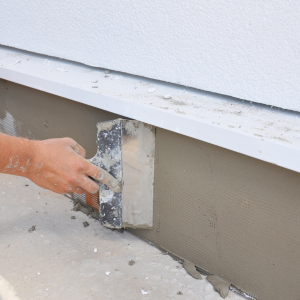
“My contractor quoted me $6,800. Why would an investor knock thirty grand off what I’m asking?” I hear that a lot, and the answer is that a quote and a risk aren’t the same number.
FoundationScout pulled together Illinois foundation repair prices for 2026, and it breaks into rough tiers. Small cracks and light settling run $500 to $2,000. A few cracks with some settlement land between $2,000 and $8,000. Heavy settlement that needs lots of piers runs $8,000 to $25,000. Piers cost $1,000 to $3,000 apiece, and a typical job uses eight to fifteen of them. Do the math and a “small” pier job turns into a twenty-thousand-dollar invoice without anyone lying to you. Basement or crawl space waterproofing adds its own line, somewhere between $1,500 and $10,000.
Nobody knows what’s behind a basement wall until a crew digs it out. Tight city lots in Chicago, Oak Park, and Evanston can turn a routine dig into hand work at hourly rates, and permits, drywall, flooring, and landscaping follow the structural job. Sellers who budget only the engineer’s repair scope tend to come up short. Owners on those narrow lots can see how to sell your Oak Park house fast for cash without opening the wall first.
A cash buyer prices that gap between quoted scope and finished cost into the offer.
Should You Make Repairs Before Selling a House with Foundation Issues?
Sellers often ask if they’ll get their money back by fixing it first.
Usually not all of it, and I know that sounds self-serving coming from a buyer. Appraisers don’t add a dollar of value for each dollar of pier. They compare your house to homes that never had the problem, and your fixed-up place lands near the price it would’ve brought as is.
Repairs make sense if you’ve got the cash on hand and no deadline. The damage also has to be small enough that a good crew will give you a lifetime warranty that transfers. That paperwork carries real weight with the next lender and inspector, because without it you’ve spent the money and still have a disclosure to write.
For most sellers I meet, the math runs the other way. Someone behind on payments or settling an estate seldom has twenty thousand dollars lying around. Borrowing against a damaged house to fix it is a rough trade.
One pattern shows up again and again: a seller does half the recommended work because half is what they can afford. The engineer’s report then shows a partial fix, buyers read it as a job left undone, and the house often sells for less than it would have untouched. Half a foundation repair is worse than none.
Are There Cash Buyers Who Will Buy a House with Foundation Issues As-is?
Every “we buy houses” sign in the state says any condition. Mention a bowed wall, though, and a lot of those numbers stop calling back, because plenty of them are wholesalers hunting for an easy flip.
Real as-is buyers exist, and the easy way to spot them is to ask what they’ve repaired. Someone who knows the work can explain helical piers versus push piers. They can tell you how carbon fiber straps go in. They’ll know why a rubble stone foundation under a 1905 Chicago cottage acts differently from poured concrete in a 1978 ranch. If someone goes quiet when you say “wall anchors,” expect them to retrade you right before the finish line.
A solid cash offer comes without an appraisal, a financing contingency, or a lender’s repair list. Braddock Investment Group is one local buyer I’d point a homeowner here toward for that reason. They judge the house themselves. No underwriter in another state makes the call. You can read more about Braddock Investment Group and the people behind the offers.
Before you sign, ask any buyer three questions. Where are the funds? Who inspected the property? What exactly would make you lower this offer later? Anyone who answers all three in writing is worth your time, and anyone who dodges the last question is setting up a price cut.
What Price Can You Realistically Expect for a Foundation-Damaged Home in Illinois?
Naperville’s median sale price was about $660,000 in September 2026, with homes taking around 50 days to sell. Statewide, the August median was close to $329,000, up 4.3 percent from a year earlier. That spread is why one statewide discount won’t tell you much.
The math on a house like this works backward. Start with what your house would sell for repaired, in your own subdivision, this season. Subtract the real repair cost with surprises included and the holding cost for the months the work takes. Then leave room for the chance the dig turns up something worse.
A $25,000 repair is a modest slice of a Naperville-priced home. On a small bungalow in Decatur with a failing block wall, that same repair eats a far bigger share. Low-priced markets punish structural damage harder than expensive ones.
Be wary of any offer that shows up before anyone has looked at the basement. I’ve watched sellers accept a high number on Monday and get hit with a twenty-thousand-dollar cut on day twenty-five, after they’d given notice on their apartment. A slightly lower offer that holds beats a high one that moves.
What Does the As-is Sale Process Look Like Step by Step?

A Peoria homeowner called me on a Monday with water running down a cracked basement wall and a daughter starting school in Indiana in forty days. She signed a contract that Wednesday and had cash at a title company nineteen days later.
The first call covers the property, the damage you know about, and your timeline. Next, the buyer walks the house, basement or crawl space included, and checks the grade outside, which is the first thing I look at myself. You skip staging, photos, and weekends of strangers opening your closets.
A written offer should follow within a day or two. It names a price, a closing date, and who pays which costs. Many cash buyers pay the closing costs, so get that in writing. Attorney review is standard here, and anyone worth working with will tell you to have a real estate attorney read the contract.
Title work tends to take the longest. The title company searches for liens, unpaid water bills, and judgments against the property, and estates add a probate step through your county’s circuit court. A buyer who’s handled Illinois probate will know whether your letters of office cover a sale.
Closing happens at a title office or by mail. You bring ID and keys, sign, and the funds wire that day or the next morning.
Selling a House with Foundation Problems in Illinois: Where Do You Start?
Before you call anyone, write down what you want the day after closing to look like.
If you need top dollar and have eight months, list it, fix it, and market it well. If you need out by a set date or can’t carry the payment another quarter, you’ve got a whole other problem, so stop comparing offers to Zillow.
Next, put your payoff statement, tax bill, insurance declarations page, and any engineer reports in one folder. For an inherited house, add the death certificate and court papers.
Then collect two or three cash offers and one agent’s opinion of value. Line them up by net proceeds instead of headline price. Braddock Investment Group will walk through that comparison with you even when the honest answer is to list. That’s the test I’d use for anyone you let into your kitchen.
How Do I Know If I’m Selling a House with Foundation Issues?
If your interior doors have stuck for two years and you’ve planed them twice, you’ve got a foundation issue.
Houses move, and they warn you in small ways first. Look for diagonal cracks running off the upper corners of window and door frames. Watch for gaps where crown molding meets the ceiling, a floor that rolls a marble toward one wall, or nail pops marching across drywall.
In the basement, stair-step cracks along the mortar joints of a block wall point to uneven settlement. A horizontal crack halfway up is more serious, since it most often means soil is pushing the wall in. If you see horizontal cracking plus any lean, call someone this month instead of waiting for spring.
Outside, check for separated brick courses, a chimney pulling away from the siding, or a dropped corner on the slab or stoop. Older Chicago bungalows tend to show it in the mortar first.
Water tells the truth, too. Seepage at the floor joint, white crust on the block, a sump pump running in dry weather: those drainage signs turn structural after enough winters. Not every crack is a crisis, and one that keeps growing is a whole other animal from one that hasn’t moved since Carter was president.
What Are the Common Causes of Foundation Issues in Illinois Homes?
For years I blamed Illinois foundation damage on old housing stock. Age plays a part, though soil and water do most of the work.
A lot of northern Illinois sits on clay-heavy soil that swells when wet and shrinks when dry. That cycle pushes on basement walls in spring and pulls support from under footings in a dry summer. Winter adds freeze and thaw, and I’ve seen fresh foundation cracks show up after one hard season.
Gutters and grading do more harm than any soil map. A downspout dumping against a block wall soaks the backfill, and wet clay presses in hard. On one Rockford street I saw two matching houses, and only the one without extended downspouts had a bowed wall.
Then there’s mining. Illinois got its first underground coal mine in Belleville in 1848. The Illinois Mine Subsidence Insurance Fund names 34 counties where mine subsidence coverage is added to property policies automatically unless the owner signs a waiver. Madison, St. Clair, Sangamon, Peoria, Vermilion, Williamson, and LaSalle are among them. If you own there, your policy may already carry it.
Tree roots, leaking pipes, and builders who backfilled with junk round things out.
What Should You Do If You Suspect Foundation Issues?
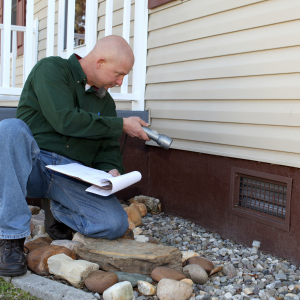
A structural engineer and a foundation contractor hand you two kinds of paper, and only the engineer’s is an opinion with nothing to sell. An Illinois licensed structural engineer tends to charge a few hundred dollars for a visit and written report. A contractor’s “free inspection” ends in a proposal.
Get the engineer first if you can. The report says whether the house is still moving, what’s causing it, and what work it calls for. It also travels with the house, which gives a buyer something to price against besides their imagination.
Call your insurance agent that same week. Standard home policies leave out earth movement and normal settling. A burst pipe or a caved-in sewer line that undercut a footing may still be covered. If you carry mine subsidence coverage, you file that claim with your own insurance company, not the Fund.
Document everything while you wait. Photograph each crack with a tape measure in the frame, date the photos, and pencil a line at each end so any movement over a season shows. Proof that a crack hasn’t widened in eighteen months puts you in a much stronger spot.
Fix the drainage while you decide. Extending downspouts and sloping soil away from the wall takes a weekend and slows whatever’s happening underneath.
What Are Illinois Disclosure Requirements for Foundation Damage?
Knowingly get the disclosure wrong and you could owe a buyer damages, court costs, and possibly attorney fees, long after you’ve spent the proceeds.
State law requires you to give the buyer a written report before they sign a contract. It’s set out in the Illinois Residential Real Property Disclosure Act. The form asks straight out whether you know of material defects in the basement or foundation, including cracks and bulges. Other questions cover basement leaks, settling and other ground problems, and whether the home sits in a floodplain.
Two parts of the law protect honest sellers. You disclose what you actually know, and the Act doesn’t make you investigate. A “material defect” is something that would have a substantial adverse effect on the home’s value. It also covers a threat to the health or safety of the people who’ll live there.
Selling as-is doesn’t switch the disclosure off. The form itself says the parties can agree to a sale subject to any or all material defects. You still fill out the report, and the buyer still takes the condition.
Buyers face a deadline too. A claim under the Act has to be filed within one year of the earliest of possession, occupancy, or the recording of the deed. An Illinois real estate attorney can tell you how that applies to your sale. I’d rather you over-disclose than test it.
When Does Selling to a Cash Buyer Beat Listing on the Market?
A couple in Oak Lawn listed a house with a repaired crack and a clean engineer’s letter. They got full price in eleven days. Next door, a house of the same vintage with an unrepaired bowed wall went through three failed contracts before that seller called me. What differed was what each seller could prove and how long each could wait.
Listing wins when you have paperwork, time, and cash to fix whatever the inspector finds. More than a third of Illinois homes sold above list price in August 2026, so a repaired house with good records can hold its own on the MLS.
Selling direct wins when your timeline or your bank account won’t cooperate. Auction dates, heirs who live out of state, divorce deadlines, tenants who quit paying, and insurers who won’t renew all punish delay.
An heir in Belleville called after a job transfer gave her five weeks to leave the state. Her father’s house had a cracked rear foundation wall, and one buyer had backed out over the appraisal. She closed before her start date.
Listing trades time for dollars, while selling direct trades dollars for certainty, so pick based on which one you’re short of.
Still unsure? Get one contractor bid and one cash offer, then check both against your calendar. The choice gets clear fast. For the cash side of that comparison, reach out through the Braddock Investment Group contact page.
Frequently Asked Questions
Do I have to fix a foundation problem before selling in Illinois?
No. Illinois doesn’t require sellers to make repairs, only to disclose. You can sell with an active crack, a bowed wall, or settlement as long as you report what you know on the Residential Real Property Disclosure Report.
Will a foundation issue kill my buyer’s financing?
It can. FHA, VA, and USDA appraisals flag structural problems that affect safety or soundness, and the lender will want them fixed before closing. Other lenders often add the same condition once “structural” shows up in the report. A cash buyer has no appraisal condition to meet.
How much do foundation repairs cost in Illinois?
Injecting a single crack often runs a few hundred dollars. Piering a settled footing or bracing a bowed wall runs into the thousands, and full underpinning can reach five figures.
Should I pay for a structural engineer’s report?
If you plan to list, most times yes. The letter costs a fraction of the repair and turns a scary unknown into a known, priced problem. Selling direct for cash makes it optional, because the buyer takes on the risk.
What if I inherited the house and don’t know its history?
Disclose what you know and mark the unknowns honestly. Sales by an executor or other fiduciary while settling an estate are exempt from the form. Confirm that with the estate’s attorney before you rely on it.
Can I sell a house with water in the basement every spring?
Yes, and you disclose it. Recurring leakage has its own line on the state form. Chronic water is one of the most common issues on houses I buy, and it seldom stops a cash sale.
If you’ve been watching a crack for three years, or you’ve got a bid you’d rather not pay, I’m glad to take a look. I’ll tell you what I’d offer and what I think you’d net on the open market. There’s no obligation, and if listing is the better move for you, I’ll say so.
Helpful Illinois Blog Articles
- How to File Quitclaim Deed in Illinois Home
- How Long Does It Take To Sell A House In Illinois
- Does a Seller Pay Closing Costs in Illinois
- Can You Sell a House With a Mortgage in Illinois?
- How Much Does It Cost to Stage a House in Illinois
- How to Sell a House in Foreclosure in Illinois
- How to Sell a Hoarder House in Illinois
- Selling a House With Mold Problems in Illinois
- Can You Sell a House as is Without Inspection
- How Much Do Realtors Charge to Sell a House in Illinois
- Can You Sell a House with Asbestos in Illinois?
- Selling a House with Foundation Problems in Illinois